
The first thing most people do when their garage door starts making a new noise is reach for a can of WD-40 and spray down everything that looks metal. It's cheap, it's already in the garage, and spraying something on a squeaky part feels like fixing it. The problem is that WD-40 is a solvent and cleaner, not a lubricant. It strips the factory grease out of roller bearings and hinge pins, and in a dry, dusty climate like Fontana's, that leaves bare metal exposed right when airborne grit from the dry season has the most to cling to. The noise often goes quiet for a day or two, then comes back louder while the actual wear underneath keeps progressing. A silicone-based garage door lubricant is a reasonable first step, but it only helps if the noise is really coming from dryness and not from a part that's worn, bent, or loose.
Grinding: A Deep, Metal-on-Metal Sound That Worsens Under Load
Grinding usually sounds like something is scraping or chewing as the door moves, and it often gets louder or the door visibly slows down when the sound happens. This is one of the noises worth stopping and looking at rather than running the door through a few more cycles.
- Worn or cracked rollers: A technician checks these first because they're the most common cause and the cheapest fix. Nylon rollers develop flat spots or crack over years of use, especially once dust works into the bearing. Fix: replace with new nylon or sealed steel rollers.
- Bent or misaligned track: If rollers are fine but still grinding, the track itself may be pinched or knocked out of alignment, often from an accidental bump with a vehicle or ladder. Fix: realign or replace the affected track section.
- Stripped opener gear: On chain-drive openers, a grinding sound from the motor unit itself, not the door, can mean the internal drive gear is stripped. Fix: gear and sprocket kit replacement, or opener replacement if the unit is older.
- Dry bearing plates at the top of the torsion spring: Less common, but checked if the above don't explain the noise. Fix: lubrication, or spring assembly service if the bearings are worn.
Squealing: High-Pitched and Often Worse on the First Use of the Day
Squealing tends to show up as a sharp, high-pitched sound that's loudest the first time the door opens after sitting overnight, which points toward dryness as a factor, especially during Fontana's long dry stretches when dust and low humidity accelerate wear on moving parts.
- Lack of lubrication on rollers, hinges, and track: The first and most common check. Fix: clean off old grease and dust buildup, then apply fresh silicone or lithium-based garage door lubricant to hinges, roller stems, and the track's contact points.
- Rollers nearing the end of their life: If lubrication only helps for a day, the rollers themselves are likely degraded. Fix: roller replacement, same as with grinding.
- Torsion spring coils rubbing against each other or the shaft: A technician checks this if the squeal is coming from directly above the door rather than along the track. Fix: lubrication if the spring is otherwise healthy, replacement if coils show rust or uneven spacing.
- Loose or dry opener chain: Fix: chain tension adjustment and lubrication.
Popping: A Sharp Bang Rather Than a Continuous Sound
Popping is different from the other three because it's an event, not an ongoing noise. A single loud bang that stops the door mid-travel or leaves it stuck is a different situation than a small pop heard once or twice during a normal open-and-close cycle.
- Loose or worn hinges: Checked first for small, repeated pops. As panels flex slightly during travel, a loose hinge can click or pop against the panel. Fix: tighten or replace hinges.
- A dent or warp in the track: If a roller hits a deformed section of track, it can produce a popping sound as it jumps past the spot. Fix: track straightening or section replacement.
- Normal torsion spring settling: Occasional small pops from the spring area, especially after temperature swings between hot inland days and cooler nights, can be the metal expanding and contracting slightly. This is usually harmless on its own.
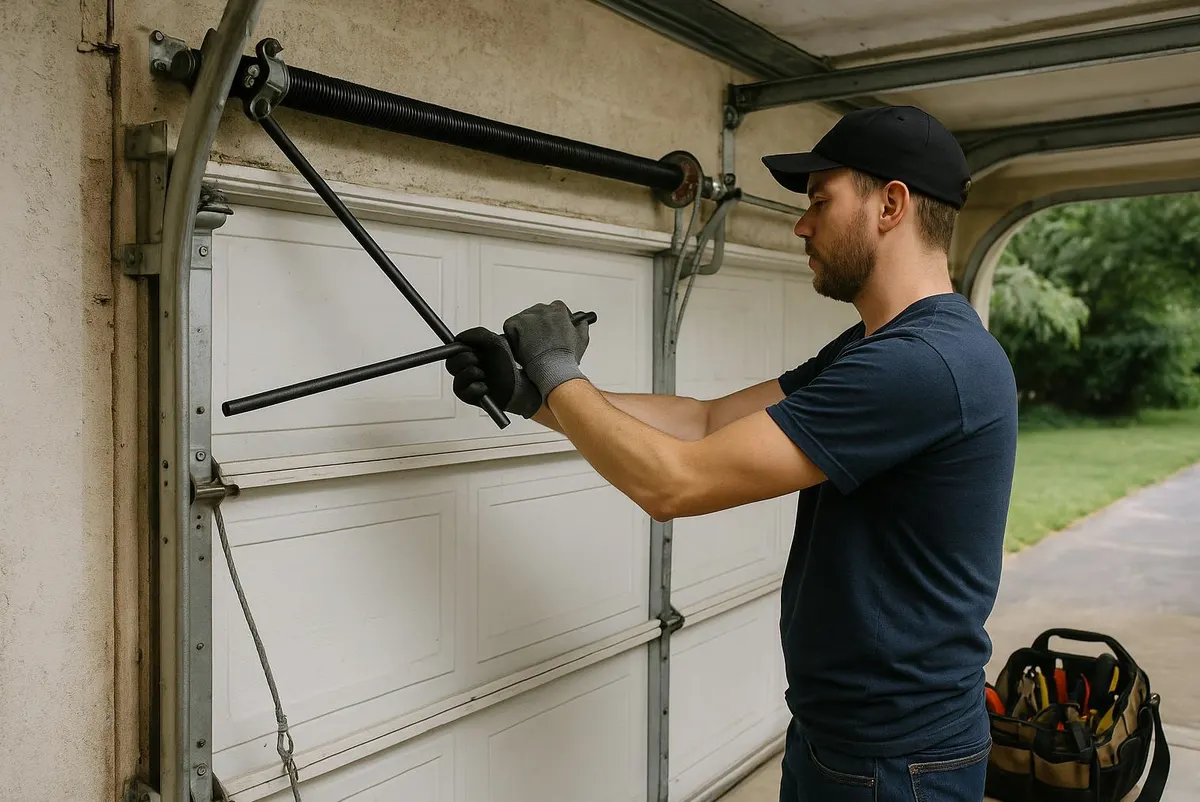
- A torsion spring at the end of its life: One loud, singular bang, especially paired with the door suddenly feeling heavy or refusing to move, usually means the spring has broken. This isn't a noise to troubleshoot yourself; the door should be left alone until a technician arrives, since a broken spring leaves the door unbalanced and the cables under uneven tension.
Rattling: A Steady, Loose-Sounding Noise Through the Whole Cycle
Rattling is usually the least urgent of the four, but it's worth addressing before it progresses into something more serious. It tends to run through the entire open or close cycle rather than happening at one point.
- Loose hardware on tracks, hinges, or brackets: The first thing a technician checks, since it's also the most common cause. Years of operation, and in some cases the shaking from minor seismic activity that homes in this area are built to tolerate, can gradually loosen bolts and lag screws. Fix: tighten all mounting hardware and brackets, including any earthquake-retrofit bracing.
- Loose chain on a chain-drive opener: A chain with too much slack slaps against the opener rail. Fix: adjust chain tension per the opener's manual.
- Opener unit loose on its mounting bracket: Fix: re-secure the opener to the ceiling joist or support bracket.
- Rollers with worn-out bearings rattling loosely in the track: Checked last, since it mimics the sound of loose hardware. Fix: roller replacement.
When to Call Fontana Garage Door Co
A quick lubrication job is fine to try yourself, but grinding that doesn't improve, a loud bang followed by a door that won't move, or rattling that keeps coming back after tightening hardware are all signs it's time to call in a technician. Our Garage Door Repair visits start with the same checklist above, in the same order, so nothing gets replaced that doesn't need to be. If the issue turns out to be a broken or weakened torsion spring, our Spring Replacement service handles it safely, with the right spring size and tension for your door rather than a generic fix.
If your garage door in Fontana, Rancho Cucamonga, Rialto, Ontario, Upland, San Bernardino, Bloomington, or Colton has started making a noise that wasn't there last month, give us a call before it turns into a door that won't open at all. We'll diagnose it on-site and tell you straight what it needs.